
 01
Contact us
Contact us by phone or email.

Supporting the future of shrine and temple architecture through traditional skills and skilled craftsmanship.
Construction business license issued by the Governor of Kanagawa Prefecture
2 second-class architects
1 first-class certified carpentry technician
Member of the Kanagawa Society of Architects & Building Engineers
Existing housing condition inspection technician
Member of the Japan Traditional Architecture Preservation Society
Completed master carpenter training at the Japan Traditional Architecture Preservation Society
Member of the Japan Wood Products Export Association
Shrine and temple construction, renovation, seismic reinforcement, and cultural property work
Main halls, guest halls, priests' quarters, gates, bell towers, pagodas, water pavilions, earthen walls, treasure halls, and more
Traditional Japanese architecture (shrines, temples, sukiya, tea rooms, old house restoration, and more)
Wooden architecture (homes with shops or clinics, educational facilities, and rural living)
Using the cultural value of wood (hometown timber, fine timber exports, and overseas construction)
Miyadaiku sustainable art, artisan art, and artisan wooden stationery
Lighting design and installation; window and light design and construction
Japanese gardens and exterior design and construction
Wood stove and fireplace design, installation, sales, and advice
Media cooperation, lectures, wood-themed bus tours, and wood education workshops
Training programs for young miyadaiku craftspeople
Our representative is determined to remain an active on-site craftsman for life. Working on site every day enables a genuine connection and mutual understanding with clients.
A commitment to lifelong craftsmanship
Our representative is determined to remain an active on-site craftsman for life. Working on site every day enables a genuine connection and mutual understanding with clients.
The ability to understand wood
When renovating old shrines, temples, or traditional homes, we must anticipate how long-assembled timber will twist when dismantled and determine whether old coatings are pigments or dyes. Work must begin only after careful consideration of such factors to avoid irreversible damage.
Traveling worldwide to build
Hanamasu's craftspeople travel worldwide to build Japanese wooden architecture. We undertake Japanese-style renovations of overseas offices, hotels, public facilities, embassies, gardens, residences, and apartments.
Corporate clients: collaborations welcome
As carpentry subcontractors, Hanamasu's master carpenters handle carpentry, construction management, and coordination of plumbing, electrical work, and delivery of residential equipment. Our understanding of the entire process allows smooth additional estimates, cost calculations, and timber procurement, making us ready to contribute on site.
Lectures for clients (free)
We hold client lectures sharing important information for creating valuable new buildings. In an enjoyable, accessible 1-hour session, participants learn about miyadaiku skills, practical wood knowledge, architectural history, academic perspectives, and legal considerations.
Our commitment to shrine and temple architecture
A landmark for 100 years into the future
Hanamasu's carpenters create beautiful, strong buildings each day with centuries ahead in mind. We continue refining our craft, envisioning a future in which these buildings remain loved by local communities and someday become a source of national pride.
3 essential conditions for proposing valuable buildings
Reassuring support from construction law specialists
Refined, beautiful, timeless designs by architects
The finest carpentry skills and ability to bring ideas to life
Only when these 3 conditions come together can a client's dream take shape.
Where carpentry skill shines
What beauty cannot be shown in drawings?
Hanamasu's carpenters faithfully inherit advanced traditional layout geometry and timber joinery, and refine their understanding of wood and use of planes and chisels every day. The delicate flowing curves cannot be captured in drawings: this is where miyadaiku craftsmanship truly shines.
Above all, before being a carpenter, one must remain a person with a sincere and pure heart. Humility and this purity of heart give rise to beautiful forms. This too is beauty that drawings cannot show.
Shrines and temples that house deities and Buddhas are crafted with advanced miyadaiku skills and, above all, a pure heart, proper attitude, and positive spirit. This gives them an unseen, dignified beauty. Though buildings, these halls become more than objects: they are places brought to life by miyadaiku hands, living alongside their communities for years to come. Their beauty emerges through use by worshippers—the highest expression of functional beauty, and the beauty of true quality and value.
Could what you truly want to achieve be something beyond a building?
What clients truly wish to achieve is often more than a building. At its root is the value of using it or a vision of the future: a place where people gather smiling, a peaceful refuge, a space to share feelings, mark life's memories together, preserve what has been inherited, or strengthen and spread shared beliefs. What do you truly hope for? Take this opportunity to think together and share those hopes with Hanamasu's carpenters.
A carpenter's deep love of wood
At Hanamasu Mokko, you can specify the origin of your timber. We seek sacred wood from places important to you—local forests, Mount Fuji, or the region of your head shrine or temple—and incorporate it into your building.
Sustainable use of wood
When old timber that supported a main hall has fulfilled its role, or trees on site must be felled for development, we preserve their precious life by turning them into furniture, pillars, or charcoal for the new building as part of our sustainable use of wood.
Hanamasu's history
Mokko in Hanamasu Mokko expresses our commitment to crafting with wood. Hanamasu is the longstanding trade name of a family business making floral ornaments for shrines and temples, founded in Kan'ei 17. Its current representative is the 14th generation of Hanamasu in Asakusa, Tokyo, carrying on the family's spirit of craftsmanship as a miyadaiku carpenter.
The importance of a dedicated miyadaiku carpenter
Does the relationship end at completion?
Shrines and temples are beautiful buildings whose character deepens with use and age. Completion is not the end of a wooden building's story; it marks the true beginning of the relationship between clients and miyadaiku carpenters.
We often hear from clients who hired distant shrine and temple builders and then struggled to arrange maintenance or small jobs. Choose miyadaiku carpenters in Kanagawa and Tokyo to preserve your buildings for years to come. Always nearby, we can respond promptly with hand tools, 24 hours a day, 365 days a year.
Our representative loves wood and carpentry and intends to remain a craftsman for life, carefully maintaining the shrines and temples he has worked on. He visits sites daily, works with his own tools, and checks every detail. This close personal relationship offers lasting reassurance.
Want to rebuild but unsure where to start? The 1 way to resolve the problem
Have years passed without construction funds or prospects for a construction committee or other preparations? There is 1 way to move forward: take the first step. Consult Hanamasu Mokko about turning long-held hopes and ideas into action. Our ability to think alongside you toward the same goal, together with specialist, architectural, and legal knowledge, the psychology of well-being, and examples of completed projects, will be essential support.
Hanamasu Mokko offers free lectures for worshippers and organizations, with an enjoyable 1-hour introduction to achieving an ideal shrine or temple on a limited budget, and bus tours exploring wood through forestry and sawmilling. Our specialist knowledge also draws on the psychology of well-being to help people gather at shrines and temples, providing useful insights for the future. Every long journey begins with a single step.
One Team Cost, Simple Cost
A carpenter's discerning timber selection avoids waste, and our manager's role as a craftsman eliminates unnecessary management costs. Where possible, we hire local or congregational craftspeople in ten trades: carpentry, stonemasonry, plastering, roofing, carving, gardening, scaffolding, joinery, tatami making, and electrical and plumbing work. Those involved continue supporting the building for years—a practical, resourceful use of local materials and skills.
Avoiding waste also makes pricing simple. Hanamasu Mokko provides valuable buildings using quality materials while keeping costs simple. We consider your budget from your perspective and propose solutions as one team working toward the same goal.
Hanamasu is the longstanding trade name of a family business making floral ornaments for shrines and temples, founded in Kan'ei 17. Its current representative is the 14th generation of Hanamasu in Asakusa, Tokyo, carrying on the family's spirit of craftsmanship as a miyadaiku carpenter.
2000: New temple bell tower in Kanagawa Prefecture
2002: Shrine renovation in Kanagawa Prefecture
2004: New temple main hall in Yamanashi Prefecture
2006: New temple main hall in Kanagawa Prefecture
2008: Fudoson renovation in Tochigi Prefecture
2009: New temple main hall in Tochigi Prefecture
2010: New temple main hall in Kanagawa Prefecture
2013: Main hall renovation in Chiba Prefecture
2014: New temple priests' quarters overseas
2015: New temple main hall in Tokyo
2019: Expansion into France; began providing miyadaiku skills worldwide
2019: Selected to exhibit at the international MAISON&OBJET exhibition
2020: Selected to exhibit at exhibitions in the United States and Beijing
2021: Launched Hanamasu Miyadaiku Tourism as an Agency for Cultural Affairs project
2022: Hanamasu miyadaiku Japanese culture cooperation project to attract international academic conferences
2023: Tea room construction at a museum
2024: Renovation of a shrine main sanctuary designated as a cultural property in Kanagawa Prefecture
2025: New temple priests' quarters and guest hall in Tokyo
Many other projects, including Japanese-style residences, sukiya, tea rooms, and small shrine and temple fittings
2824 Hanbara, Aikawa-machi, Aiko-gun, Kanagawa 243-0307, Japan
Open in Google Maps ↗1-chome 13, Nishitobe-cho, Nishi-ku, Yokohama-shi, Kanagawa 220-0047, Japan
Open in Google Maps ↗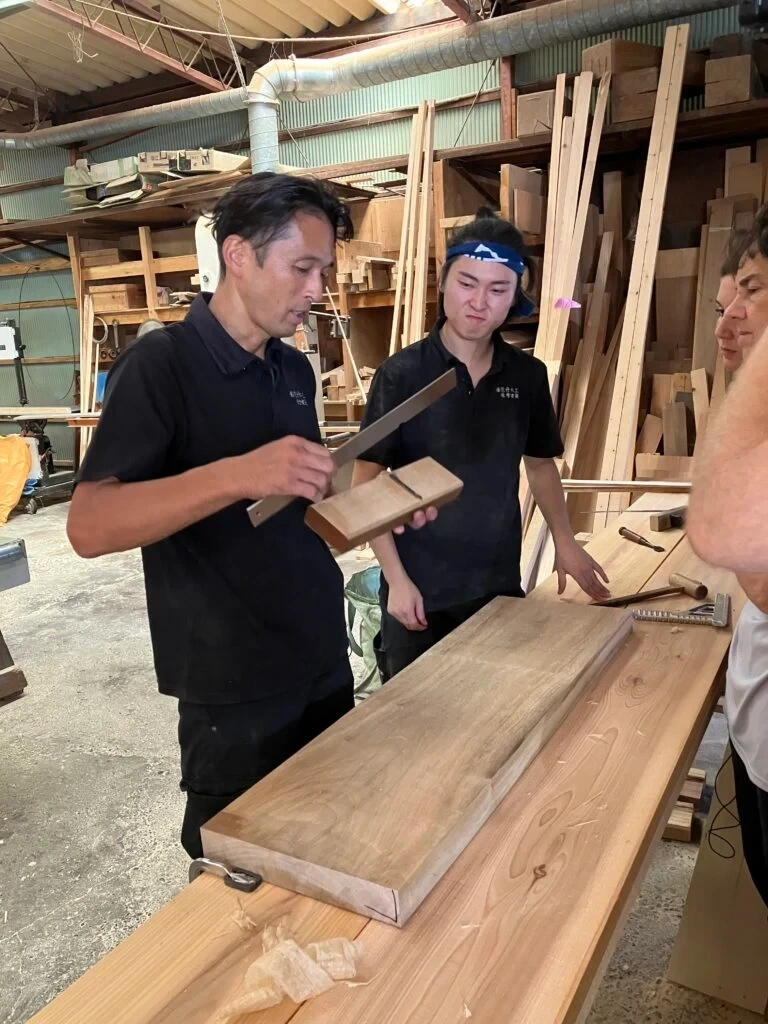
Hanamasu Mokko Shaji Kenchiku's miyadaiku training program, where real miyadaiku skills become second nature.
A hands-on miyadaiku training curriculum
We are neither a timber merchant nor a sawmill. Hanamasu goes directly into the forest to choose timber on site — the "ability to see through wood" — and generously passes on to young craftsmen our experience of building around the world.
We position creating an environment for training young people as our top priority and devote ourselves to training new miyadaiku.
Because our curriculum is hands-on, real miyadaiku skills become second nature. What matters most is awakening a "feel" by making skills second nature rather than "teaching and learning".
Traditional apprenticeship, handed down since ancient times, has become practically impossible, and in the Heisei era the number of companies training craftsmen from scratch fell sharply due to the recession. As a result, wooden construction specialists have decreased sharply and Japan's advanced traditional wooden construction skills have declined markedly.
In addition, the turnover of young miyadaiku is high and the training of wooden construction specialists is declining. To reverse this, we run training that passes on authentic miyadaiku skills directly from active master carpenters, the ability to respond case by case on site — the most important skill for a miyadaiku — and communication and perseverance as a craftsman and a person before being a working adult.
2025.03.25 Launch of Miyadaiku e-learning for overseas learners
E-learning for overseas learners (private YouTube videos)
Information coming soon
A special program to experience the world's oldest wooden construction skills
Selected for the Agency for Cultural Affairs' project to add high value to cultural assets to promote visits to Japan by travelers seeking high-quality tourism services
This program was selected as a project promoted by the Agency for Cultural Affairs to create high-value tourism content using Japan's cultural assets. Its purpose is to let travelers from Japan and abroad experience the world-class skills of miyadaiku.
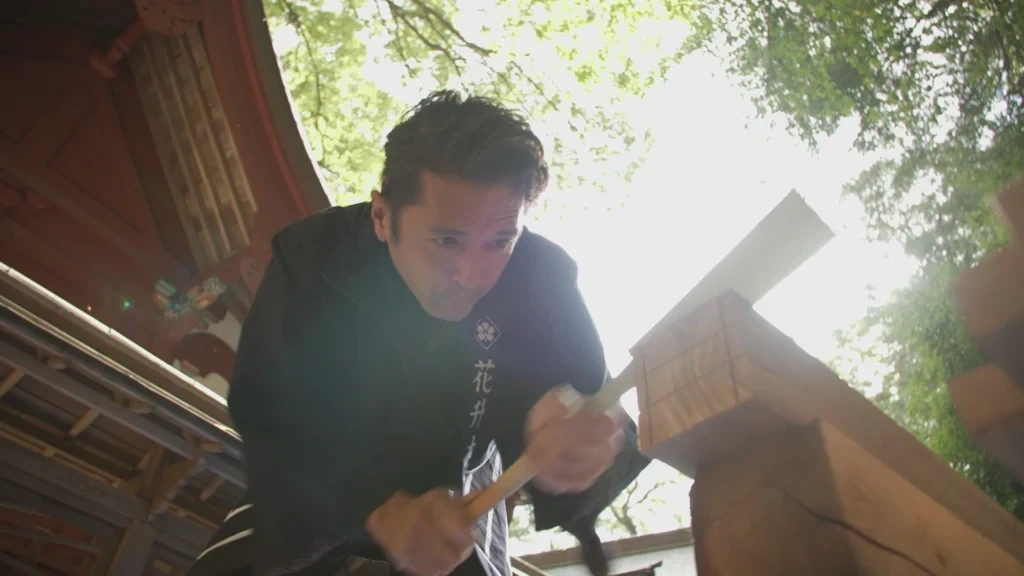
A carpenter who builds and restores shrines, temples and palaces — repairing buildings built hundreds or thousands of years ago and passing them on to the next era. It is one of the most sacred professions.
A miyadaiku's work is not mere construction. It creates places that serve the gods and Buddha and gives shape to people's spiritual home. It demands facing wood, accepting the laws of nature, and both reliable skill and deep spirituality.
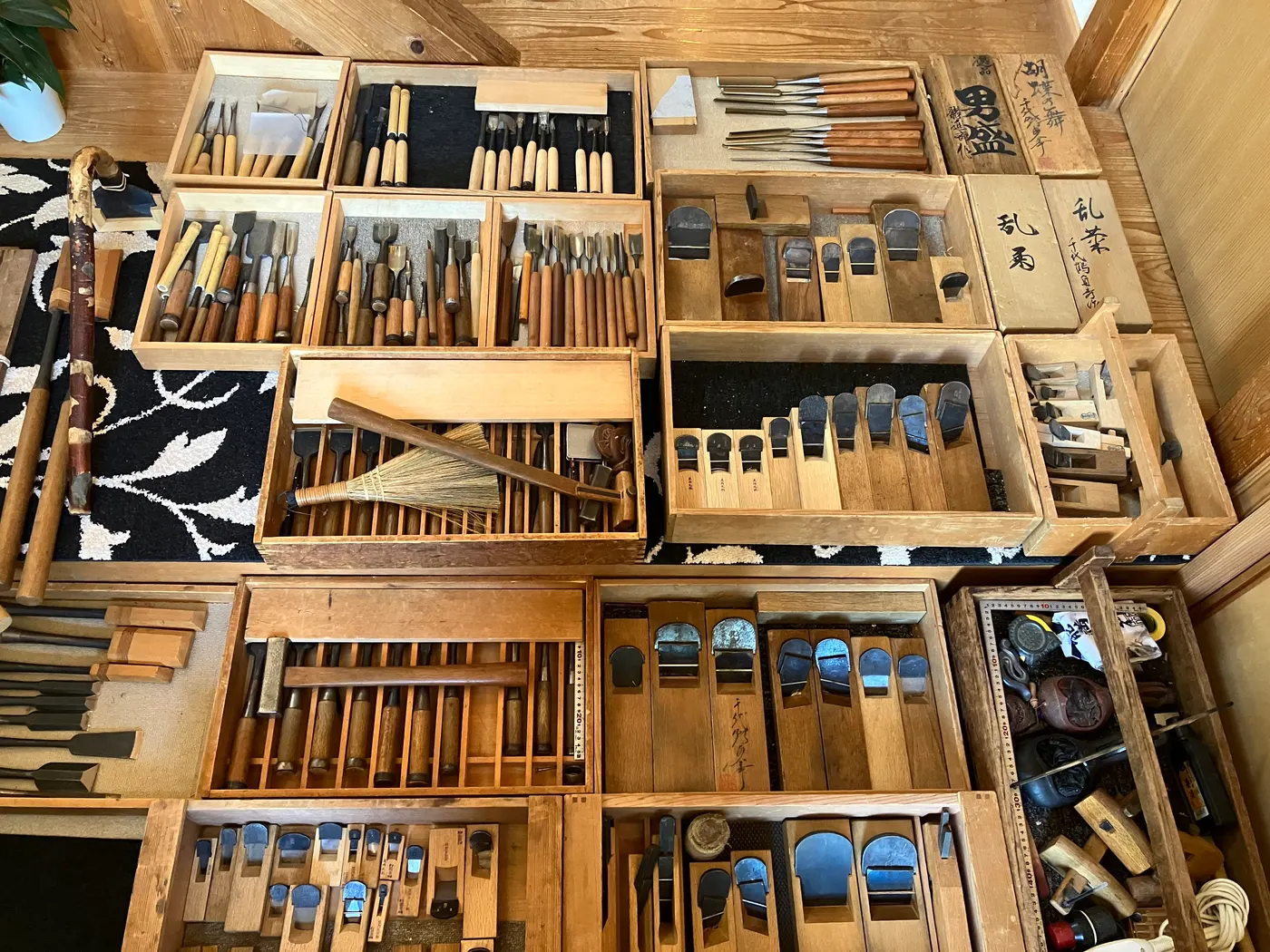
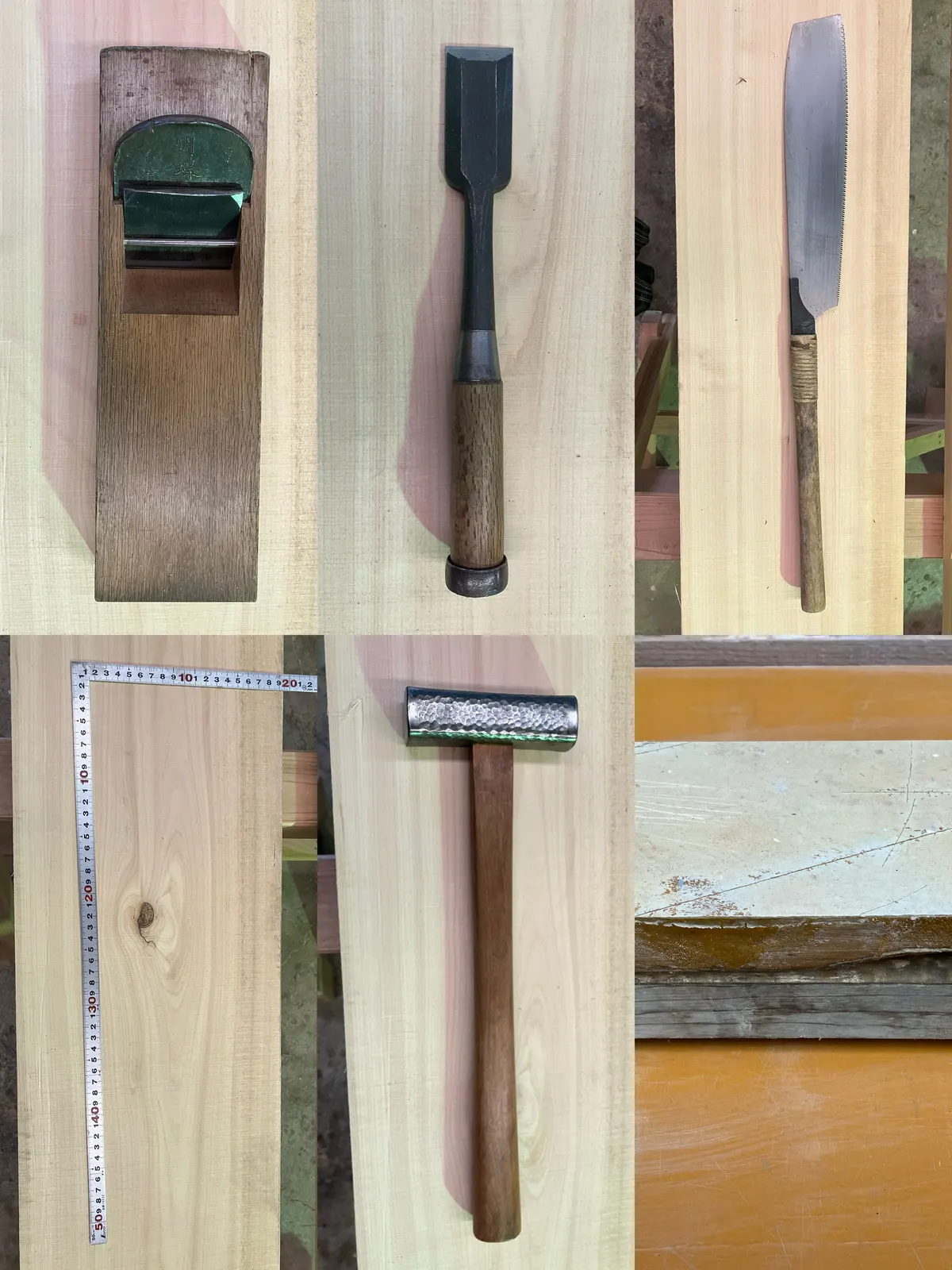
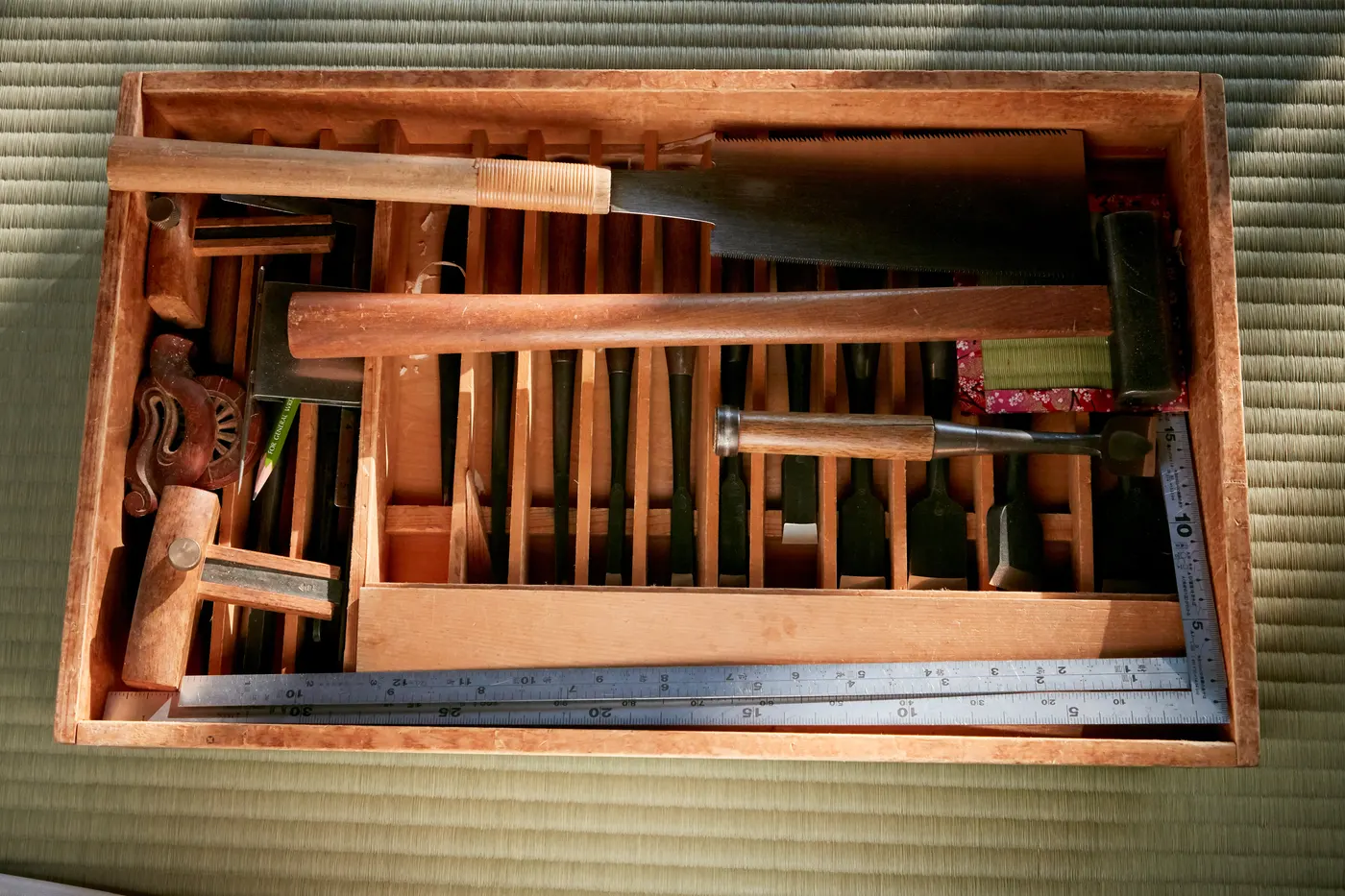
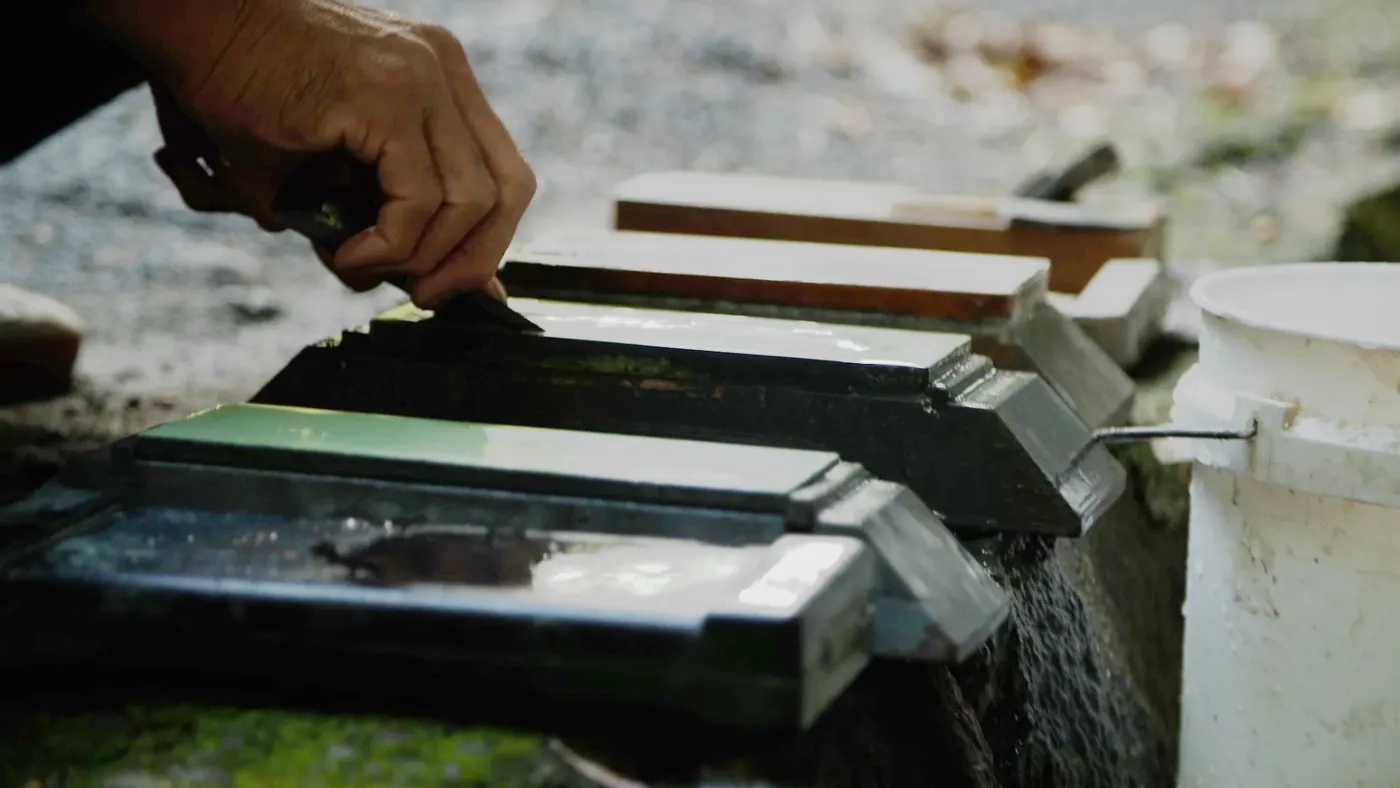
Chisels, planes, carpenter's squares and other tools used by craftsmen for many years
A craftsman's view that sees not only buildings but people's hearts
Skills from 1,400 years ago are still alive today
In the Man'yo era, the way of Shikishima was said to be the way of waka poetry. Like flower arrangement and tea ceremony, some ways have formal schools yet are widely practiced.
Yet in the world of miyadaiku, who have long served the gods, there is still no name for such a way, because this skill has always been handed down "for the gods and Buddha".
The handwork of these craftsmen shows a world opposite to modern architecture. Fitting wood to wood and erecting buildings without nails — this skill has survived 1,400 years and is still alive today.
The world's oldest wooden building, Horyuji. Its history goes back about 1,400 years. Many of the world's other oldest wooden buildings are also Japanese shrines and temples — why?
The secret lies in Japan's unique wooden construction skills: shrine and temple structures with intricate wood carvings, and buildings still standing after hundreds of years. Behind these mysterious skills are miyadaiku techniques registered as UNESCO Intangible Cultural Heritage "Traditional Skills".
The miyadaiku's work can be called the world's oldest full-scale business. Letting people today experience those skills and that spirit — that is "Miyadaiku Tourism".
Registered as UNESCO Intangible Cultural Heritage "Traditional Skills"
"Do not speak of temple halls without revering the gods and Buddha"
The most important perspective of a miyadaiku begins with the resolve to build shrines and temples. The gods and Buddha say nothing, but these are places people rely on, feel at ease in and turn to.
We cherish this wish to "build a spiritual home". Here lies the high spirituality of miyadaiku. Building shrines and temples is also building people's hearts.
Facing wood and accepting the laws of nature
Ikaruga, Ikoma District, Nara
The world's oldest surviving group of wooden buildings, 1,400 years old. Nail-free kumimono brackets and precise carving.
Nikko, Tochigi
"The beauty of incompleteness is the Japanese aesthetic." Read the craftsmen's intent in deliberate "imperfections" such as the inverted pillar.
Yokohama, Kanagawa
Do not just "look" at buildings — "read" them. Uncover the meaning in each carving and the tilt of each pillar.
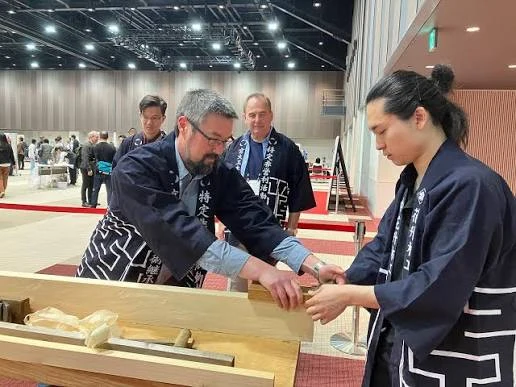
A master carpenter guides each person carefully. You experience with your own hands the basic skills that have supported Japanese shrine and temple architecture.
Feel how much effort and skill even building a small hut requires — an experience that makes you want to protect and pass on this traditional art.
Wood planing / Shrine and temple visits / Guidance by the master carpenter / Explanation of joinery / Demonstration of wood joints
Always converse with the wood
Venue: shrines, temples and historic buildings in Yokohama
Transfers: Haneda Airport, Yokohama Station, Osanbashi International Passenger Terminal
Options: tea ceremony, worship etiquette, zazen, lunch
Price: please contact us
Dates: arranged as needed. Please contact us with your preferred dates and group size.
It was a rare opportunity to learn directly from a master miyadaiku carpenter. The feeling of shaving wood, using tools, and the spiritual side of architecture—I experienced things with my whole body that books could never teach. Discovering the depth of traditional Japanese architecture has inspired my continuing interest.
— Experience participant
Information coming soon
Our training curriculum is hands-on. Not "teaching and learning" but making it "second nature".
Learn with your hands. Grow on site.
Hanamasu Mokko Shaji Kenchiku's miyadaiku training program, where real miyadaiku skills become second nature.
Because our curriculum is hands-on, real miyadaiku skills become second nature. What matters most is awakening a "feel" by making skills second nature rather than "teaching and learning".
Traditional apprenticeship, handed down since ancient times, has become practically impossible, and in the Heisei era the number of companies training craftsmen from scratch fell sharply due to the recession. As a result, wooden construction specialists have decreased sharply and Japan's advanced traditional wooden construction skills have declined markedly.
In addition, the turnover of young miyadaiku is high and the training of wooden construction specialists is declining. To reverse this, we run training that passes on authentic miyadaiku skills directly from active master carpenters, the ability to respond case by case on site, and communication and perseverance as a craftsman and a person.
If you understand our aims, please apply for a workshop tour.
Positions: a few
Expected graduates
Paid during training / Full-time employment (after training) / Dormitory during training
For details, please contact us by email with the required information
・Name ・Age ・Date of birth ・Gender ・Address ・Phone number ・Reason for wishing to visit ・School or workplace
5+ years of carpentry experience
We are looking for people with 5+ years of carpentry experience, such as house carpenters, who want to become miyadaiku or wooden construction carpenters.
Paid during training / Full-time employment possible after training / Dormitory during training
For details, please contact us by email with the required information
・Name ・Age ・Date of birth ・Gender ・Address ・Phone number ・Reason for wishing to visit ・Current workplace
Participation for 1 year in the miyadaiku training program of the NPO Miyadaiku Wooden Technology Succession Association is required (paid, dormitory during training)
Awakening a "feel" by making skills second nature rather than "teaching and learning".
After joining, you will systematically learn the following skills under one-to-one guidance from skilled miyadaiku.
Ink-line marking with a sumitsubo / Using hand tools (chisels, planes) / Basic knowledge and judgment of timber / Health and safety
Joint cutting (kanawa-tsugi, bracket sets, etc.) / Assembling bracket sets / On-site column and beam work / Reading drawings and marking
Practical work at shrine and temple sites / Site management and assisting the master carpenter / Strengthening timber judgment / Overseas projects possible
For details, please contact us by email with the required information. If you understand our aims, please apply for a workshop tour.
info@hanamasu.co.jp
0463-93-6665 / Weekdays 9:00–18:00
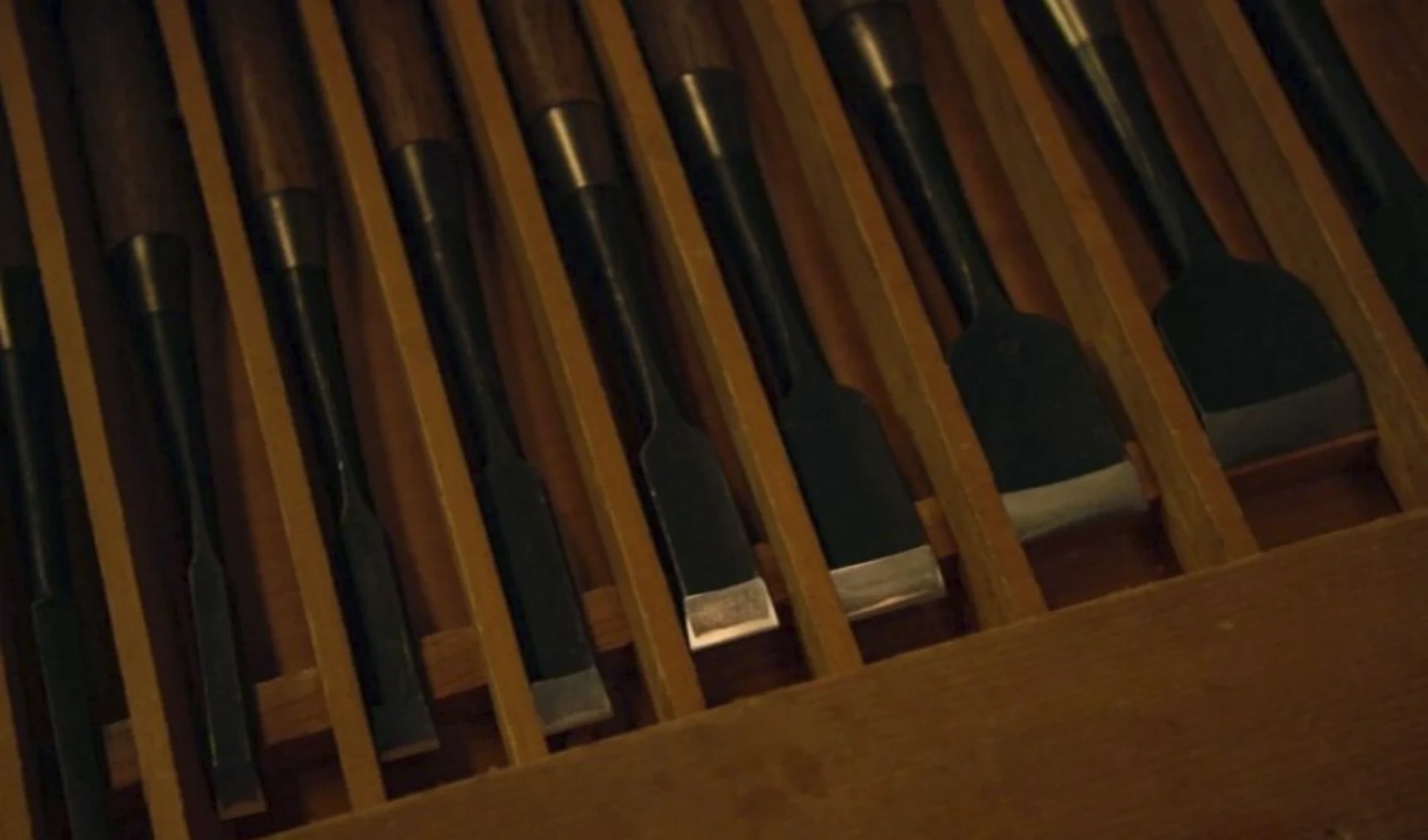
Planes, chisels, ink lines and marking brushes, saws, genno and other hammers, carpenter's squares, and wooden mallets
Power tools: acceptance depends on condition
Items beyond repair and similar items may not be accepted.
Used for loans or provision to young craftspeople, hands-on classes, and displays.
01Contact us by phone or email.
 02
Tell us the types, quantities, and condition of your tools.
 03
We discuss visits, shipping, and timing.
 04
Acceptance is decided after physical inspection. Items beyond repair and similar items may not be accepted.
Skill and spirit carved into Hanbara, the sacred land of miyadaiku
Hanbara, in Aikawa Town, Aiko District, Kanagawa, has long been known nationwide as a renowned home of miyadaiku carpenters. Hanamasu Mokko keeps its own workshop in this sacred land of miyadaiku, which has supported many historic buildings, and continues to face traditional craftsmanship with sincerity.
The name Hanbara holds special meaning in the history of Japanese architecture. Countless master carpenters left this small mountain village to build and restore shrines and temples across the Kanto region and throughout Japan.
The spirit of the craftsmen still lives on in Hanbara today.
Behind Hanbara's prosperity as a home of miyadaiku lie its rich natural environment and historical geography.
Blessed with the rich forests of the Tanzawa Mountains, the area produced plenty of hinoki and cedar ideal for shrine and temple architecture, and craftsmen learned from childhood to touch wood and judge its character.
Being close to centers of mountain worship such as Oyama Afuri Shrine, famous for the Oyama pilgrimage, and the renowned Shorakuji Temple, the area naturally called for advanced woodworking skills.
The techniques refined by craftsmen in this environment spread, mainly in the Edo period, beyond Kanagawa to the whole Kanto region and on to the building and restoration of shrines and temples across Japan.
No account of Hanbara's miyadaiku is complete without the Yanai family, including Yanai Seikichi, revered as ancestors of carpentry, and the craftsmen around them. The essence of the skills handed down by Hanbara's miyadaiku lies in two great features.
Traditional joinery that withstands earthquakes, wind and rain continues to support buildings across centuries. This technique of fitting timbers precisely together without nails was refined to the limit by Hanbara's craftsmen.
Exquisite wood carvings vividly adorn the kohai porches and ranma transoms of shrines and temples. Their delicate, three-dimensional beauty still leaves its mark on many cultural properties, shrines and temples today.
Hanbara is a sacred land that produced many master carpenters and where the history and passion of shrine and temple architecture run deep. Hanamasu Mokko keeps its own workshop here to inherit the craftsman's spirit and genuine skills that flow through this place and pass them on to the next generation.
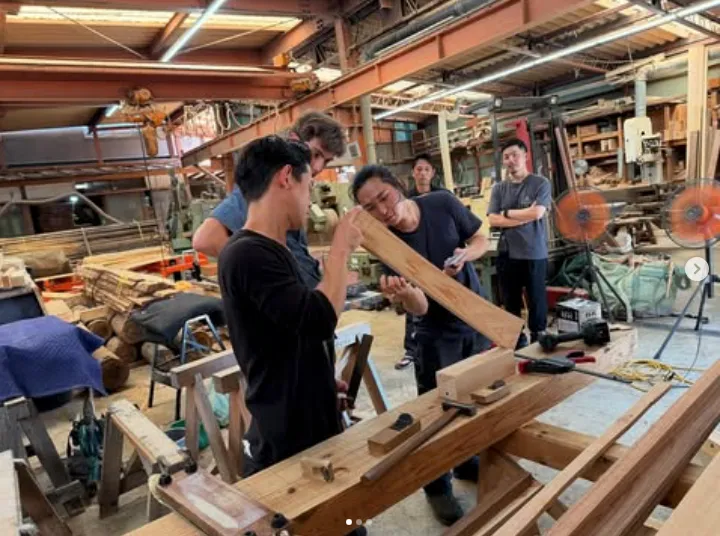
In the workshop, surrounded by Hanbara's clear air and history, skilled miyadaiku do uncompromising handwork from judging timber to shaping it.
From marking and cutting carefully selected timber to traditional woodworking and carving, craftsmen who inherit the DNA of the masters keep honing their skills every day.
Alongside traditional techniques, we actively combine modern seismic and reinforcement technology to deliver reliable shrine and temple architecture suited to changing times.
The focus and pride that only a special place like Hanbara can draw out are poured into every shrine and temple building Hanamasu Mokko creates.
Protecting historic traditional techniques, and building and restoring reliable shrines and temples suited to changing times.
From our workshop in Hanbara, the sacred land of miyadaiku, Hanamasu Mokko will continue to deliver heartfelt joinery and shrine and temple architecture.
2824 Hanbara, Aikawa-machi, Aiko-gun, Kanagawa 243-0307
寺社建築や文化財修復を手掛ける伝統建築の専門職人。
神社や寺院、城郭などの伝統木造建築の建築・修復を専門とする大工。一般的な住宅大工とは異なり、数百年以上の耐久性を持つ建物を造るため、高度な木組みや規矩術、木材を見極める深い知識が求められる。
神社や寺院を対象とした日本伝統建築の総称。
日本の宗教建築である神社(社殿)と寺院(仏堂)の総称。大陸から伝わった仏教建築様式と、日本固有の神道建築様式が融合・発展を遂げた、美しい曲線美の屋根や精巧な木組みを特徴とする建築群。
神社の祭祀空間を構成する伝統建築様式。
神道の神々を祀るための建築様式。神明造や大社造、流造、権現造など多くの様式があり、一般に直線的または自然な反りを持った屋根、鳥居や玉垣による聖域の区画、高床式構造などが大きな特徴。
仏教寺院の伽藍を構成する伝統建築様式。
仏教の御本尊を安置し、修行や礼拝を行うための建築様式。和様、大仏様、禅宗様などの様式があり、重厚な組物(斗栱)で支えられた深い軒、瓦葺きの屋根、左右対称の伽藍配置などが特徴。
歴史的建造物の価値を守るための修復作業。
歴史的・文化的価値の高い国宝や重要文化財の建造物を、後世に継承するために行う保存・修復作業。解体調査による痕跡の確認に基づき、可能な限り創建当時の技法や部材を維持・再現して行われる。
木材同士を組み合わせて構造を作る伝統技術。
釘やボルトなどの金属製金物に頼らず、木材に「継手」や「仕口」と呼ばれる複雑な切り込みを入れて強固に結合させる日本伝統の構法。地震の揺れを柔軟に吸収・分散する高い耐震性を持つ。
木材を長手方向に接合する加工技術。
2本以上の木材を、その長さ(長手)方向に継ぎ足して1本の長い部材にするための接合技法。引張力や曲げの力に対抗できるよう、金輪継ぎや追掛大栓継ぎなど用途に応じて多様な形状が使い分けられる。
1 / 15
0120-181-171
Weekdays 8:00–18:00
 Instagram